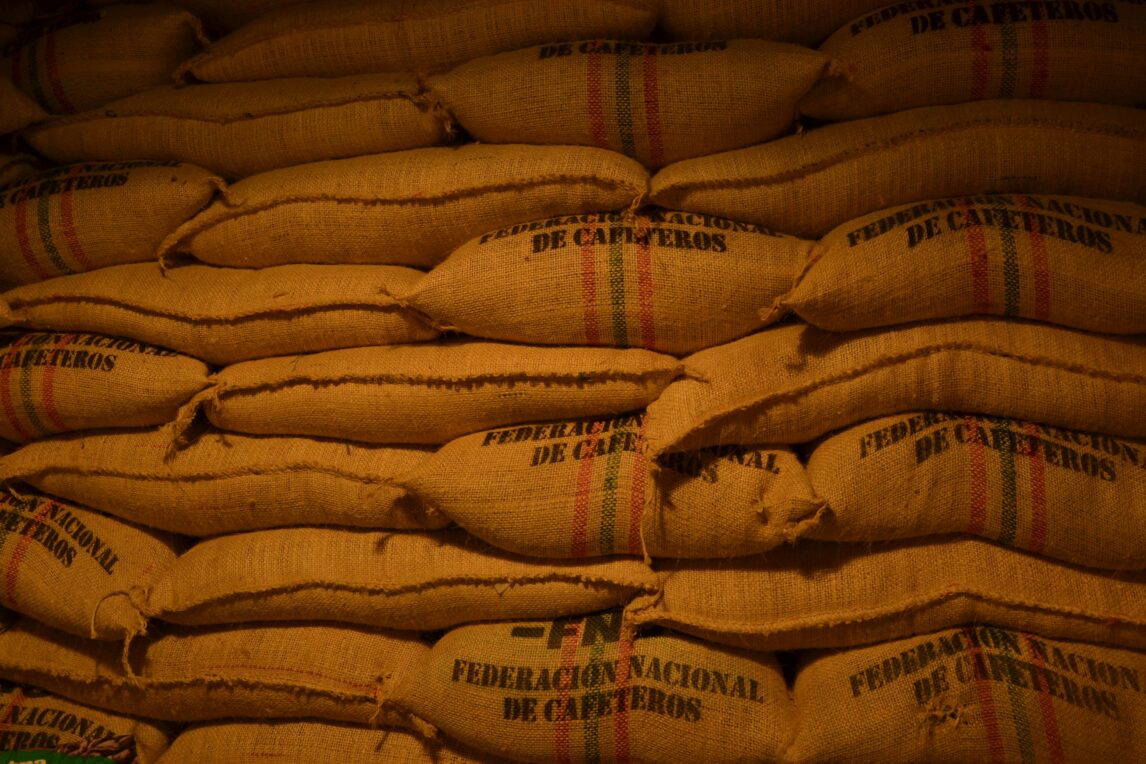
From family-run farms to corner cafes, the coffee industry supply chain is a worldwide network with multiple stops and stages. Transparency and traceability ensure that everyone involved in coffee’s journey from farm to cup is treated ethically, and that steps are taken to minimize the environmental impact.
The supply chain is notoriously opaque. With multiple intermediaries, importers, exporters, and other personnel involved in every step, it’s often difficult to pinpoint the origin and pricing structure of coffee beans. Furthermore, environmental consequences and exploitative labor practices are often intentionally concealed, for obvious reasons.
While the coffee industry still has a long way to go as a whole, progress is being made. Modern technologies and consumer demand are leading to a more transparent and traceable supply chain. Mindful individuals, businesses, and organizations are being proactive in making much-needed changes.
What is the coffee bean supply chain?
The supply chain is a connected series of stages across multiple geographical locations that begins with growing crops and ends with consumer purchases.
The typical stages of the supply chain are:
- Growing: Farmers plant and maintain coffee crops to grow cherries until they’re ripe.
- Harvesting: When the cherries are ripe, they’re picked by hand or machine.
- Processing: The beans are extracted from the cherries and then hulled, cleaned, sorted, and (sometimes) graded.
- Exporting/Importing: The processed beans are packaged for travel and shipped to their end destination.
- Roasting: The raw coffee beans are roasted to bring out coffee’s signature flavors and aromas.
- Retail Sale: The beans are either packaged and sold or turned into coffee beverages.
In this blog, we’re going to dive deeper into what the coffee industry supply chain looks like and how you can use it to inform your decisions as a consumer.
Step 1: Cultivation and Harvesting
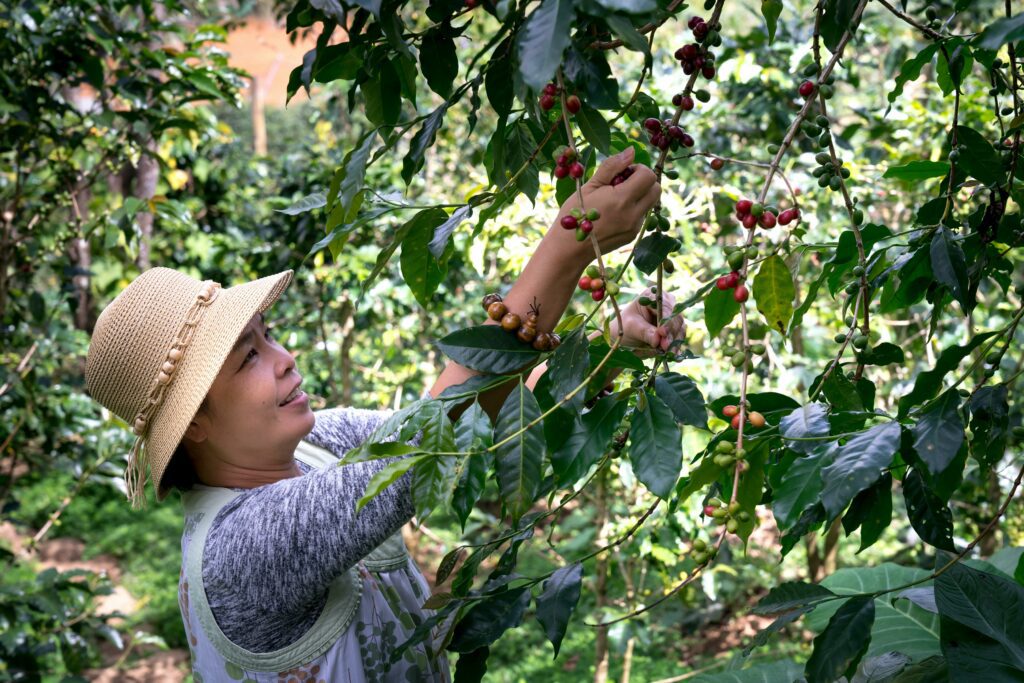
As one would logically assume, the life of a coffee bean begins at the farm. There are coffee-growing regions all around the globe, each with its own unique terroir. While environmental conditions and farming techniques vary widely, all coffee crops begin as seeds. The farmers diligently tend to the crops until the cherries are ready to be harvested by machine or by hand.
Step 2: Processing
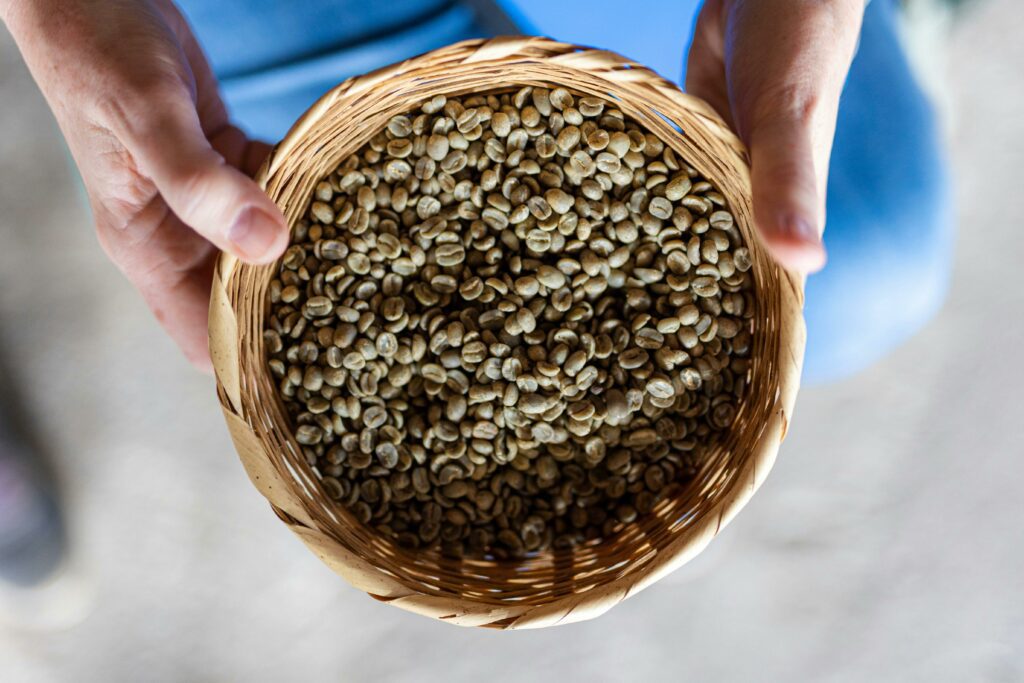
Processing is the next stop on the coffee supply chain. Some farms process the coffee cherries in-house; others send the cherries to third-party processing facilities. The coffee beans are extracted from the cherries by drying them in the sun (dry processing) or using water to remove the surrounding pulp (wet processing).
After the bean extraction process, the next step is milling the beans, which is when they’re hulled, cleaned, and sorted. At this point, the beans may be assessed and graded based on various factors such as quality and size, but not always. Grading is most commonly performed for specialty coffee beans, which are the best of the best.
Step 3: Packaging and Exporting
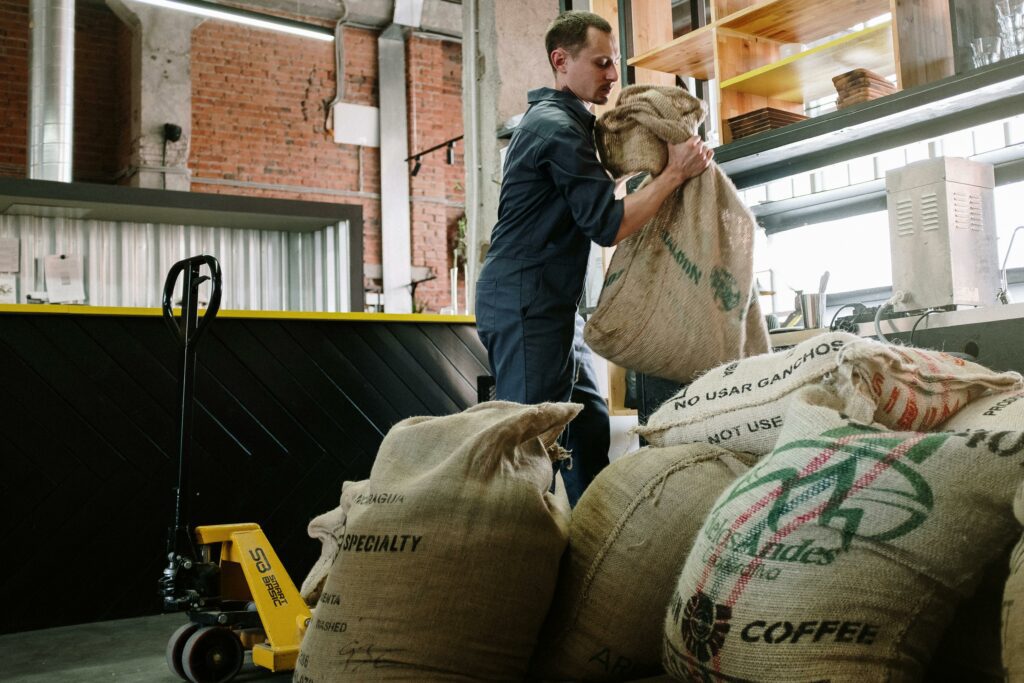
Once the beans are processed, they’re ready to graduate from the farm to the global coffee industry supply chain. During this stage, the beans are packaged for travel, typically in burlap sacks that provide protection and airflow. For large shipments, particularly those on container ships, specialized bags and liners may be used to prevent the beans from being exposed to contaminants and moisture.
After being packaged, the beans are shipped from the producing communities to the consuming communities. There may be multiple importers, exporters, and liaisons involved in transporting the beans, and there are often multiple stops for aggregation and consolidation before the beans finally reach their final destination(s).
Step 4: Roasting
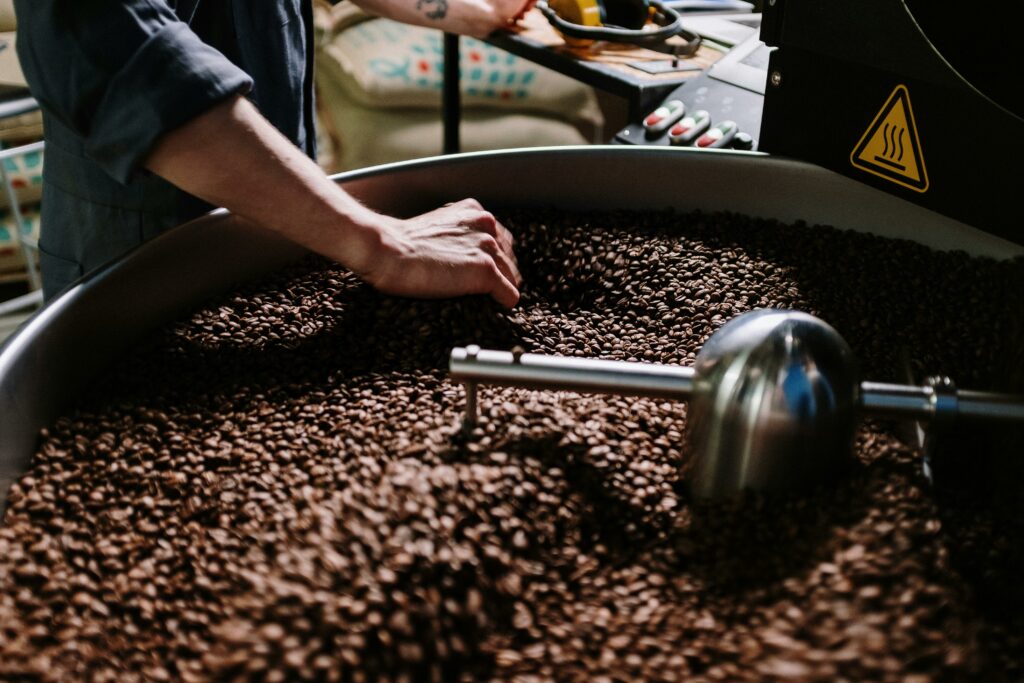
After moving through the coffee supply chain and reaching the consuming community, the beans then need to be roasted. There are large-scale roasting companies, but many businesses (like us!) handle the roasting in-house. Roasting is what gives coffee its signature flavor and aroma. The most common coffee roasting types are light, medium, and dark.
Step 5: Retail Selling

After being roasted, the beans are packaged for retail and either shipped to the end seller or simply put on the shelves. The beans are typically sold whole or ground at cafes, grocery stores, and online shops.
Step 6: Consuming

Finally, the beans’ long journey comes to an end when they’re sold or brewed for consumption. Yes, you’re part of the supply chain, too!
Why is the coffee industry supply chain controversial?
The controversy that surrounds the coffee industry stems mainly from environmental concerns, social issues, and income inequality.
Many mindful consumers have grown concerned over the impact that the coffee industry has on the planet, including deforestation, water pollution, and the carbon footprint left by transportation.
The coffee industry can also take a toll on the workers, which may include problematic factors like unfair wages, unsafe working conditions, and child labor.
Although these issues are still prevalent, there are many industry players that focus heavily on sustainable and equitable solutions.
How can consumers support ethical coffee?
Here are steps you can take to keep your coffee consumption ethical:
- Know the Source: There are transparent, traceable coffee supply chains that let you follow the beans’ journey from farm to cup and make sure every step aligns with your values. Check the certifications, the origin, and the roaster’s values before purchasing.
- Support Small Businesses: Skip the corporate giants that operate under a profit-first business model. Instead, buy coffee produced by smaller operations, seeking out local, independent coffee shops that partner with ethical suppliers or the farmers directly.
- Choose Sustainable Packaging: The packaging, in addition to the coffee beans, is important too. Choose eco-friendly, biodegradable packaging that reduces waste, greenhouse gas emissions, and carbon footprint.
What Traceability and Transparency Look Like
Keeping the coffee industry ethical and as sustainable as possible requires diligence and vigilance. Left unchecked, nefarious parties that prioritize profit over all else will inevitably adopt a coffee industry supply chain that exploits people and the planet. Fortunately, mindful consumers do have options that align with their values.
If you’re interested in being proactive about your coffee, it’s important that you understand what traceability and transparency look like. You should be able to clearly trace the beans back to their origin. You should be able to verify that the farmers work in safe conditions and are compensated fairly. You should be able to confirm that steps were taken to mitigate environmental impact.
Emerging technologies are playing a vital role in the traceability and transparency of the coffee supply chain. For example, take a look at the lower right corner of our El Salvador single-origin coffee. There’s a QR code that provides insight into the origin of the coffee beans! In recent times, some companies have also started using the blockchain to create a digital record of the beans’ journey.